What Is the Traditional Food of Udupi?
Udupi’s food reputation precedes it almost everywhere in India say the name and most people immediately think dosa, idli, or a spotless vegetarian thali served on a banana leaf. That reputation is earned, but it’s also incomplete if that’s all you know about it.
Traditional Udupi cuisine sits within the broader coastal Karnataka food culture, and a few threads run through nearly all of it:
- Coastal Karnataka influence – shared traits with its neighbours, from coconut in nearly everything to a spice palette built around chillies, curry leaves, and mustard seeds.
- Strong vegetarian tradition – the defining feature that sets Udupi apart within the wider coastal food identity.
- Rice-based meals – rice anchors the daily plate and gives rise to the cuisine’s most famous exports, dosa and idli.
- Coconut and local spices – the structural base of most curries and chutneys.
- Simple but flavourful preparation – a style that stays understated rather than showy.
- Influence of Udupi’s temple and culinary traditions – a lineage that traces directly back to the town’s temple kitchens.
That last point matters more than people realise. Udupi is, first and foremost, a temple town, and the food served in and around its temples for centuries has shaped how the rest of the town cooks, even in homes and restaurants with no direct temple connection. If you’re planning a visit, exploring Udupi’s food culture can genuinely be as interesting as visiting its sights. Our guide to things to do in Udupi can help you plan a trip that covers both.
History of Udupi Cuisine
Udupi’s Temple Food Tradition
The Krishna Matha in Udupi has been feeding pilgrims for centuries, and that scale of daily cooking for hundreds, sometimes thousands, of people demanded food that was simple to prepare, used easily available local ingredients, and followed satvik principles: no onion, no garlic, and a general preference for food that’s considered “pure” or calming rather than pungent. That temple kitchen discipline filtered outward into the town’s everyday vegetarian cooking, which is part of why Udupi food, even outside temple walls, tends to favour clean, well-balanced flavours over heavy or excessively rich preparations.
Influence of Coastal Karnataka
Beyond the temple influence, Udupi’s food is shaped by the same coastal geography that defines the rest of this belt: rice paddies, coconut groves, and a monsoon season that dictates what vegetables are actually available at any given time. Seasonal ingredients matter a lot more here than in cuisines that rely on year-round imported produce; a lot of traditional Udupi dishes exist specifically because a certain vegetable or leafy green was abundant during a particular part of the year, and someone figured out the best way to cook it.
How Udupi Cuisine Became Popular Beyond Karnataka
Here’s the part of the story that explains why “Udupi restaurant” is now a recognisable phrase across India, not just in Karnataka. As people from this region migrated to cities like Mumbai and Bangalore in the 20th century, many opened small vegetarian eateries serving the food they knew: dosa, idli, vada, filter coffee. These restaurants were often clean, affordable, fast, and reliably vegetarian, which made them popular with a broad cross-section of customers. Over decades, “Udupi restaurant” became almost a category of its own in urban India, and dishes that started as regional, temple-adjacent food became everyday South Indian staples recognised nationwide even by people who’ve never actually been to Udupi.
What Makes Udupi Cuisine Unique?
Predominantly Vegetarian
This is the defining trait, and it’s not incidental; it’s tied directly to the temple food tradition described above. Where a lot of coastal Karnataka food embraces seafood and meat as a matter of course, traditional Udupi cuisine developed around a strict vegetarian framework, and that identity has stuck even as the town’s food scene has diversified over time.
Use of Coconut
Coconut plays much the same structural role here as elsewhere on this coast: fresh coconut in chutneys, coconut-based gravies forming the backbone of curries, and coconut oil used as a cooking medium in many traditional households, giving dishes a subtle sweetness and aroma that’s hard to fake with substitutes.
Rice as a Staple
Rice isn’t just a side dish here; it’s the foundation of the cuisine’s most recognisable exports. Dosa and idli, both rice-based (idli typically combines rice with urad dal, fermented together), are the dishes that carried Udupi’s food identity across the country. Beyond these, plain steamed rice remains the anchor of a traditional meal, alongside various rice preparations that use the grain in entirely different textures and forms.
Balance of Flavours
Traditional Udupi cooking pays close attention to balancing five distinct notes within a single meal, sometimes within a single dish: sweet, sour, spicy, salty, and a touch of bitterness. A typical thali will usually hit all five without you consciously noticing, which is part of why the food feels satisfying without ever feeling heavy. This isn’t an accident; it’s a deliberate approach carried over from Ayurvedic and satvik food principles that shaped the temple kitchens in the first place.
Famous Traditional Foods of Udupi
H3: Traditional Udupi Breakfast
Breakfast here is where the cuisine is most globally recognised:
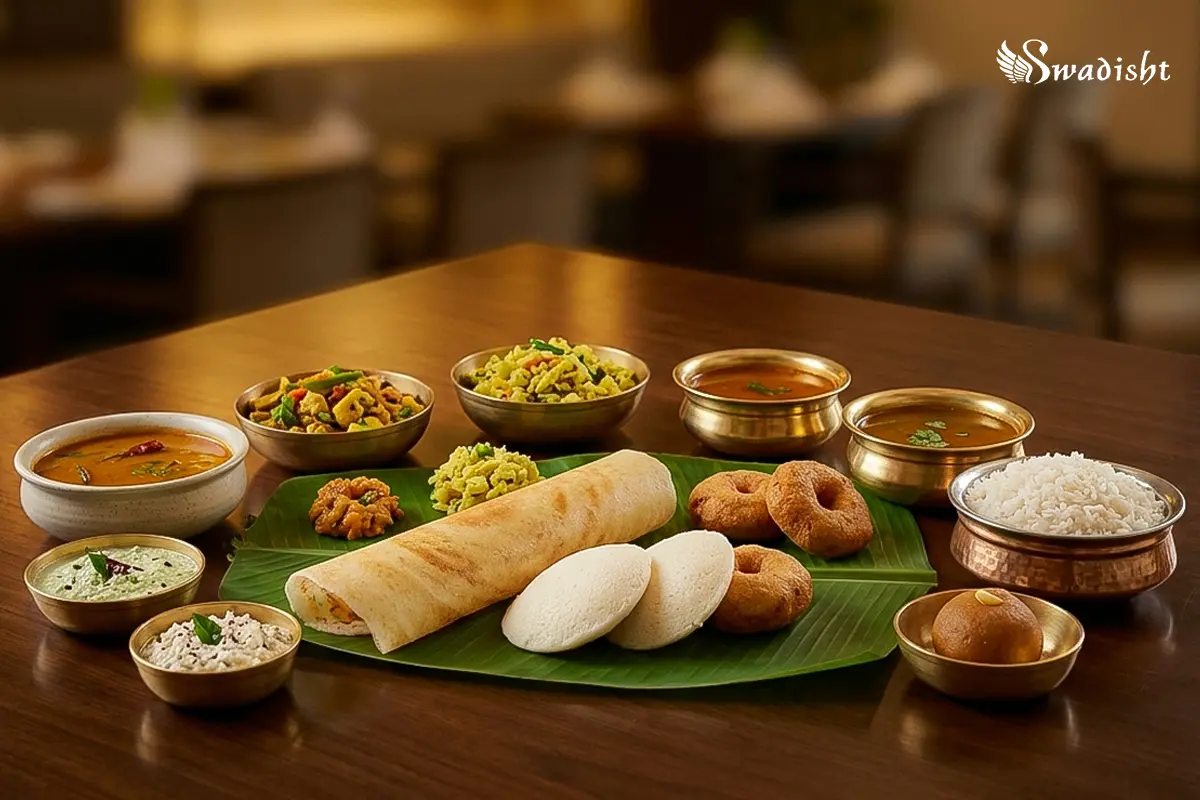
- Idli – soft and steamed, usually served with sambar and coconut chutney.
- Dosa – comes in several forms, from the plain crisp version to more elaborate stuffed varieties.
- Medu vada – a deep-fried lentil doughnut with a crisp exterior and soft centre; a breakfast and snack staple.
- Neer dosa – thinner and made without fermentation, more specific to this coastal belt than to Udupi restaurants elsewhere.
- Upma – made from roasted semolina or occasionally rice rava, rounding out the typical breakfast spread.
Traditional Udupi Rice Dishes
Beyond plain rice, this cuisine turns the grain into a handful of distinct one-pot preparations:
- Rice meals – plain steamed rice, the daily anchor of most traditional meals.
- Puliyogare – a tangy tamarind rice, tempered with mustard seeds, curry leaves, and peanuts, often prepared for festivals and temple offerings.
- Chitranna – a lighter, lemon-based rice preparation, less intense than puliyogare but just as commonly made for everyday meals or small gatherings.
- Pongal – a comforting rice-and-lentil dish, sitting somewhere between a breakfast item and a light meal depending on how it’s made: savoury with pepper and cumin, or sweetened with jaggery for festive occasions.
- Other regional rice preparations – several smaller, household-specific variations that rarely make it onto restaurant menus outside the region.
Traditional Udupi Curries & Side Dishes
- Sambar – a lentil-and-vegetable stew flavoured with a specific spice blend; the dish most associated with an Udupi-style meal outside the region.
- Rasam – a thinner, more peppery and tamarind-forward soup, usually accompanying the meal rather than replacing it.
- Saaru – a related but distinct preparation, often lighter and used interchangeably with rasam depending on the household.
- Gojju – brings that same sweet-tangy-spicy profile found across coastal Karnataka cooking, usually built around one specific vegetable.
- Vegetable curries – largely coconut-based, rotating with the seasons.
Udupi Snacks
- Goli baje – deep-fried fritters made from a fermented rice-and-urad-dal batter with curd and green chillies; crisp outside, soft and slightly tangy inside.
- Local savoury snacks – various fried snacks specific to the region that fill out the tea-time spread.
- Vada – the classic South Indian lentil fritter, in its local variations.
- Buns – the slightly sweet, fried bread common across this coast, usually paired with strong filter coffee.
Traditional Udupi Thali – What Does It Include?
A traditional Udupi thali is less a fixed menu and more a template that gets filled in based on the season, the occasion, and the household preparing it. A typical version includes steamed rice, sambar, rasam, one or two vegetable preparations, kosambari (a raw salad usually made with soaked lentils, cucumber, and coconut), a pickle, a chutney, curd or buttermilk, and a small sweet to finish. The exact combination varies quite a bit: a temple thali will lean more austere, while a festive or restaurant thali might include several additional items served in small individual bowls around the rice.
If a proper thali experience is what you’re after, our menu in Bannanje includes a vegetarian spread built around many of these same components.
Key Ingredients Used in Traditional Udupi Food
Rather than a plain list, here’s what each ingredient actually contributes:
- Coconut – provides body and a natural sweetness to gravies without needing dairy.
- Rice – the base grain for meals, dosas, idlis, and several standalone dishes.
- Tamarind – the primary souring agent, central to sambar, rasam, and puliyogare.
- Curry leaves – added to hot oil at the start of cooking for aroma; a near-universal tempering ingredient here.
- Mustard seeds – popped in hot oil as the first step of most tempering, giving dishes their characteristic crackle and flavour.
- Cumin – used both whole in tempering and ground into spice mixes.
- Coriander – a base spice in most curry powders used across the cuisine.
- Red chillies – for heat and colour, used both whole and ground.
- Black pepper – especially prominent in rasam and satvik preparations, where onion and garlic are avoided.
- Seasonal vegetables – the reason so many traditional dishes exist only at certain times of year.
Famous Udupi Flavours and Cooking Techniques
- Coconut-based preparations – dominate the curry side of the cuisine, giving dishes a smooth, rounded texture without relying on cream or excessive oil.
- Roasting and grinding spices – rather than using pre-made powders, traditional households still dry-roast coriander, cumin, and chillies before grinding, which changes the final flavour noticeably and adds depth that pre-ground spice mixes tend to lack.
- Tempering – locally sometimes called “oggarane” or “phodni” depending on the community, and arguably the single most important technique here. Mustard seeds, curry leaves, and urad dal are dropped into hot oil until the mustard seeds pop and the dal turns golden, then poured over a finished dish sambar, rasam, kosambari right before serving.
- Sour ingredients – mainly tamarind and raw mango- give this cuisine its characteristic tang and balance the richness of coconut and the heat of chillies.
- Seasonal cooking – traditional Udupi cuisine doesn’t try to serve the same vegetables year-round; it adapts to whatever the monsoon and local farms are producing at a given time, which is part of why the food still feels genuinely tied to this specific place rather than a generic South Indian formula.
Vegetarian Food Culture in Udupi
Udupi’s vegetarian identity runs deeper than a dietary preference it’s woven into the town’s religious and social fabric:
- Temple food traditions – particularly around the Krishna Matha, which set the original template for satvik, onion-and-garlic-free cooking.
- Vegetarian restaurants – across the town continue that legacy, often run by families with generational ties to temple cooking.
- Everyday vegetarian meals – at home, following the same principles of seasonal vegetables and coconut-based preparations.
- Seasonal vegetables – the backbone of what actually ends up on the plate at any given time of year.
- Coconut-based preparations – the base for most curries and chutneys, vegetarian or otherwise.
- Traditional sweets – payasam varieties in particular, marking festivals and special occasions, prepared in large batches for temple offerings and community meals.
Taken together, this is why Udupi is so specifically associated with vegetarian food, rather than just being “another coastal Karnataka town” that happens to avoid meat.
Traditional Udupi Food vs Coastal Udupi Seafood
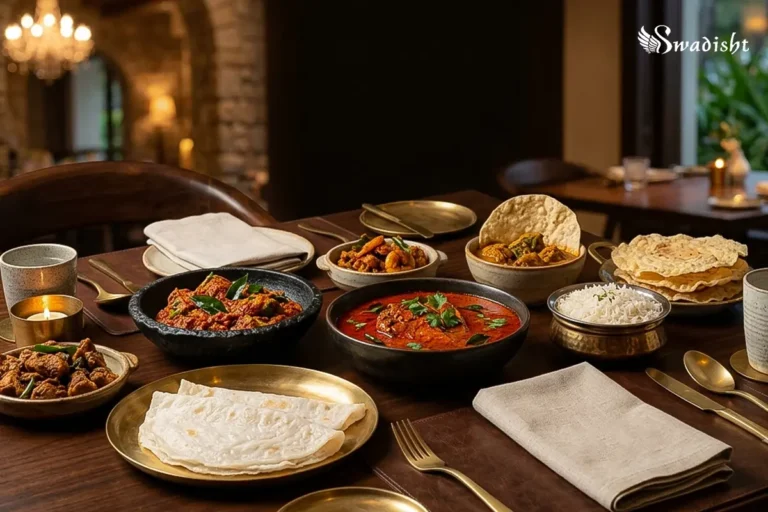
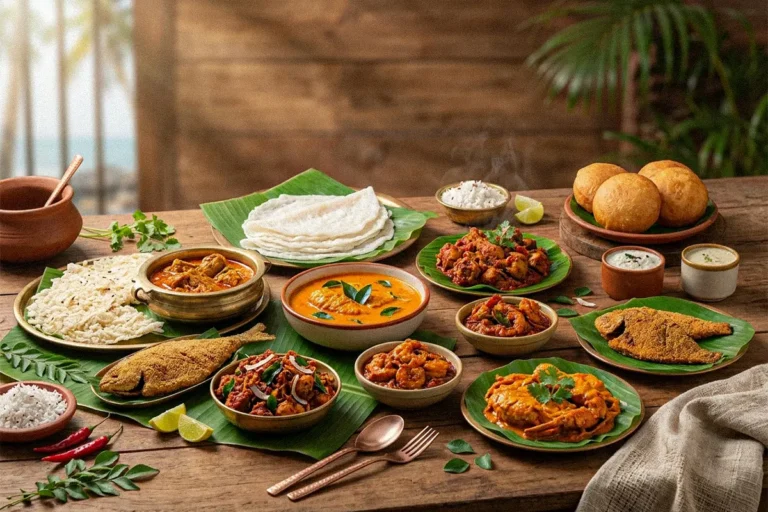
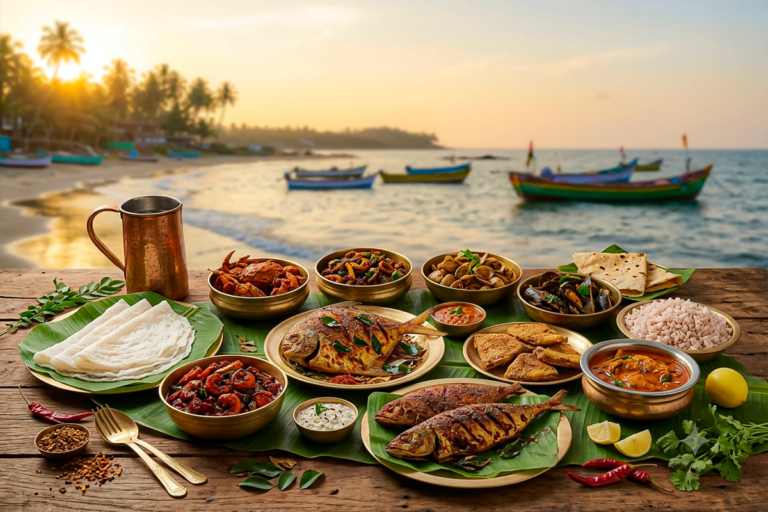
It’s worth being upfront about something: Udupi’s food identity is genuinely split into two traditions that don’t always get equal airtime. The temple-rooted vegetarian cuisine is what most people picture, but the coastal communities living along Udupi’s stretch of the Arabian Sea have their own, equally long-standing seafood tradition, built around the same daily catch that feeds neighbouring coastal towns.
While traditional Udupi cuisine is widely associated with vegetarian food, the coastal region also has a strong seafood culture running parallel to it. Seafood lovers can explore our guide to the best seafood to try in Udupi for a proper look at that side of the town’s food identity.
10. Popular Non-Vegetarian Food in Udupi
We won’t repeat a full dish list here, since we’ve already covered that ground in detail elsewhere but it’s worth acknowledging that Udupi’s coastal communities have their own rich non-vegetarian food traditions running alongside the town’s famous vegetarian cooking, built around fresh fish and locally raised meat.
If you’re looking specifically for meat and seafood dishes, our guide to the best non-veg food in Udupi walks through five dishes worth seeking out.
Traditional Sweets of Udupi
Sweets in this cuisine are rarely an afterthought many are tied directly to specific festivals or temple rituals. Payasam, a milk- or coconut-milk-based sweet dish made with rice, vermicelli, or lentils and sweetened with jaggery, appears in countless variations depending on the occasion and household. Holige (also called obbattu), a sweet stuffed flatbread filled with a jaggery-and-lentil or coconut mixture, is a festival staple that takes real skill to get right rolling it thin without tearing the filling is harder than it looks. Kesari bath, a semolina-based sweet coloured and flavoured with saffron or turmeric, is quicker to prepare and shows up at everyday celebrations. Traditional coconut-based sweets round out the category, often prepared in bulk for temple offerings and community festivals.
These sweets play a real role in festivals, temple meals, and special occasions they’re not just dessert, but part of how celebrations and religious observances are marked in this culture.
Where to Experience Traditional Food in Udupi
The best way to actually understand Udupi’s food culture is to experience it firsthand from a traditional vegetarian thali to the coastal specialities running alongside it. Reading about kosambari or puliyogare only gets you so far; the balance of flavours this cuisine is known for is something you notice on the plate, not on the page.
If you’re looking for a place to try this, our restaurants in Udupi serve a menu built around these same traditional components.
Best Foods to Try in Udupi for First-Time Visitors
A practical starting point if you’re new to this cuisine:
- For breakfast – dosa, idli, or medu vada, ideally with filter coffee.
- For a traditional meal – an Udupi-style thali, which will introduce you to most of the cuisine’s core flavours in one sitting.
- For snacks – goli baje or buns, best eaten hot.
- For vegetarian food generally – sambar, rasam, and a coconut-based vegetable preparation.
- For seafood lovers – see our guide to the best seafood to try in Udupi.
- For non-veg lovers – see our guide to the best non-veg food in Udupi.
For any of the above, our best restaurants in Udupi are a solid place to start, with both vegetarian and non-vegetarian options on one menu.