What Is Mangalorean Cuisine, Really?
Ask five different Mangalorean households what makes their food “Mangalorean,” and you’ll probably get five different answers. That’s not a contradiction; it’s the whole point. Mangalorean cuisine isn’t one fixed recipe book; it’s the food culture that grew out of a narrow strip of Karnataka’s coast where the Arabian Sea, backwater rivers, coconut groves, and paddy fields all sit within a few kilometres of each other.
What ties it together is fairly consistent, though:
- Coastal location and seafood influence – the Arabian Sea sits right at the region’s doorstep, so fresh fish, prawns, and crab are a daily reality, not a special occasion.
- Coconut-based cooking – fresh, milked, or ground into a paste, coconut forms the base of most gravies rather than being used as a garnish.
- Spices and masalas – bold in flavour but rarely one-dimensional; heat is balanced deliberately rather than piled on for its own sake.
- Rice as a staple – in one form or another, rice anchors almost every meal, from the everyday plate to the elaborate feast.
- Influence of different communities – the food carries the imprint of several distinct groups who’ve shaped it over generations, covered in more detail below.
- Everyday food vs festive dishes – a regular weekday meal might just be rice, a simple fish curry, and a stir-fried vegetable, while a wedding or festival spread is a different animal entirely, with multiple curries, fried items, and sweets that take days to prepare. Both are “Mangalorean cuisine,” but they tell you different things about the culture.
If you’d rather taste this than read about it, our restaurants in Mangalore serve a fair number of these dishes on a single menu, which is more than most home kitchens attempt on any given day.
History of Mangalorean Cuisine
H3: Coastal Geography and Its Influence
Geography did most of the groundwork here, long before anyone wrote a recipe down. Mangalore sits where the Netravati and Gurupura rivers meet the Arabian Sea, which means the region has always had access to fish, prawns, crabs, and shellfish in quantities that inland towns simply didn’t. Coconut palms grow easily in this climate, so coconut became the default fat and thickener rather than something used sparingly. The same goes for rice: the wet, humid coastal belt is well suited to paddy cultivation, and rice fields still line the roads leading out of the city.
Spices came partly from what grew locally and partly from trade. Mangalore was a working port for centuries, and ports tend to accumulate ingredients from wherever ships happen to dock. Chillies, in particular, arrived through this trade route and were embraced so completely that the region now grows its own variety, the Byadgi chilli prized for colour more than raw heat.
Influence of Different Communities
Here’s something that surprises a lot of first-time visitors: there is no single “Mangalorean community.” The food carries fingerprints from several groups who have lived side by side in this region for generations: the Tuluva people (whose language, Tulu, gives the region its cultural backbone), Goud Saraswat and other Konkani-speaking communities, Mangalorean Catholics, the Beary Muslim community, and Gowda farming communities, among others.
Each brought something specific to the table. Konkani households, for instance, lean toward vegetarian coconut-based preparations with a distinct souring technique. Mangalorean Catholic cooking is known for its pork and meat dishes with a Portuguese-era influence, visible in preparations that use vinegar and a slow-cooked masala base. Beary cuisine draws on Malabar and Arab trading links, favouring rice-based preparations like pathiri and biryanis with their own regional twist. None of these traditions cancels the others out; they exist on the same street, sometimes in the same family through marriage, which is exactly why Mangalorean food resists being reduced to a “top 10 dishes” list.
How Mangalorean Food Evolved Over Time
For most of its history, this food lived in home kitchens, passed down without measurements: a fistful of this, an “until it smells right” of that. Restaurants specialising in Mangalorean food are actually a fairly recent development in the broader history of the cuisine. As the city grew and people moved out for work and education, Mangalorean restaurants started appearing first in Bangalore and Mumbai, then further afield.
That migration changed the food slightly. Some dishes got milder for outside palates; others, ironically, became more elaborate as restaurants competed to showcase “authentic” coastal flavour. What hasn’t changed is the core technique: coconut ground fresh, spices roasted before grinding, and a preference for balancing heat with tang rather than dousing everything in cream or ghee, which is more of a North Indian approach.
What Makes Mangalorean Cuisine Unique?
Coconut-Based Cooking
Coconut isn’t a garnish here; it’s structural, and it shows up in several distinct forms:
- Fresh coconut – grated and used raw in chutneys and dry preparations.
- Ground coconut – blended with spices and a little water to form the base for most curries, giving them body without needing cream or extra oil.
- Coconut milk – extracted in a first and second pressing, used in specific dishes where a lighter, sweeter gravy is wanted.
- Coconut oil – the traditional cooking medium in many Mangalorean Catholic and Tuluva households, giving dishes a faint but distinct aroma that’s hard to replicate with a refined, neutral oil.
Bold Coastal Spices
The spice cabinet here is fairly specific:
- Byadgi chilli – does the heavy lifting for colour and a moderate, rounded heat; you get deep red gravies without your mouth catching fire.
- Coriander – dry-roasted before grinding, which changes the flavour noticeably compared to raw powder.
- Cumin – usually roasted alongside coriander, used both whole and ground.
- Fenugreek – used sparingly; adds a slight bitterness that balances richer gravies.
- Pepper – historically one of the reasons this coast mattered to global trade in the first place; still turns up in rasam-style preparations and pepper-based curries.
- Mustard – popped in hot oil as the base of the tempering, or “phodni.”
- Curry leaves – added to the same tempering, at the start or end of cooking, for that unmistakable coastal fragrance the moment it hits hot oil.
Tangy Flavours
If there’s one thing that separates Mangalorean gravies from, say, a Punjabi curry, it’s the sourness and it comes from a handful of specific ingredients:
- Tamarind – the most common souring agent, used in fish curries and rasams.
- Raw mango – grated or sliced into curries and pickles when in season, for a sharper, fruitier sourness.
- Kokum – a dried fruit rind used particularly in vegetarian and coastal preparations for a milder, almost smoky tang.
- Bimbli (bilimbi) – a lesser-known sour fruit that grows on trees in many local backyards; used in pickles and certain fish preparations, and one of those ingredients that rarely makes it into restaurant menus outside the coast.
Rice and Rice-Based Foods
Rice underpins nearly everything, but not always in the form outsiders expect. Beyond the plain steamed rice served with meals, this region turns rice into batters, flours, and even standalone dishes like idli and dosa; these are all local dishes to try in Mangalore that you need to check out. We’ll get into specific preparations shortly.
Famous Mangalorean Dishes
Rather than another generic dish list, it’s more useful to think about this food in categories because a fish curry and a neer dosa are doing completely different jobs on the table.
Famous Mangalorean Seafood Dishes
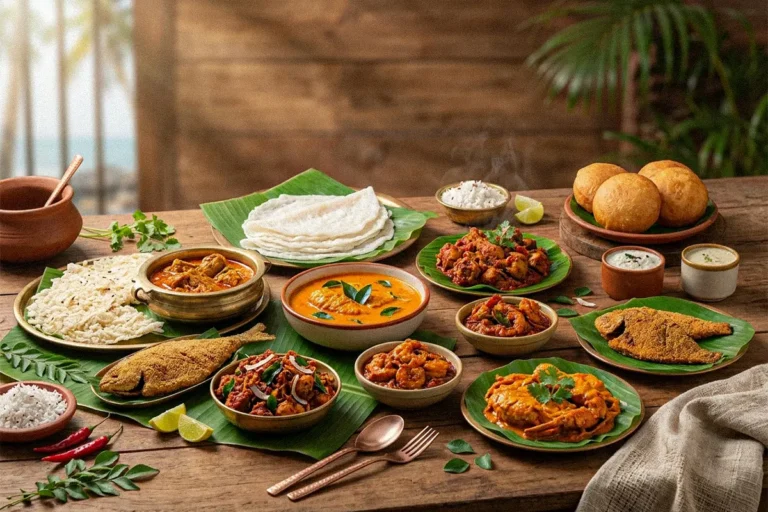
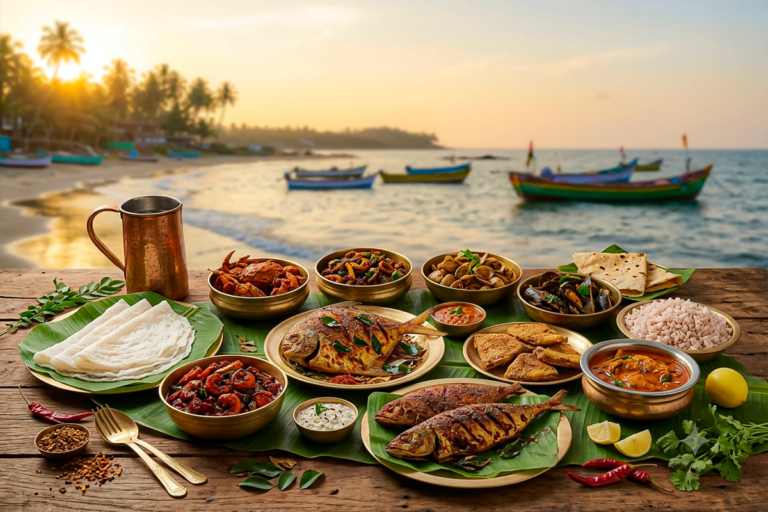
Seafood is where this cuisine is best known, and for good reason:
- Fish curry – a ground coconut-and-chilli base with souring agents like tamarind or kokum depending on the household; mackerel and sardines are the everyday choices, while pomfret and kingfish appear on more special occasions.
- Fish fry – usually a whole small fish or fillet coated in a rava (semolina) and spice mix before shallow-frying; arguably the dish most associated with this coast in people’s minds.
- Prawn dishes – ranging from a quick, dry prawn sukka to a coconut-based prawn curry.
- Crab preparations – particularly crab sukka and crab curry, which locals tend to order specifically when eating out, since they’re more labour-intensive to prepare at home.
For a much longer breakdown of what to order and why, our piece on best seafood to try in Mangalore is worth a read before you plan a coastal food trip.
Popular Vegetarian Mangalorean Dishes
Vegetarian cooking here is not an afterthought to the seafood; it has its own depth, particularly among Konkani and Tuluva households:
- Gojju – a tangy-sweet-spicy preparation, often made with a specific vegetable like ash gourd or okra, cooked in a jaggery-tamarind base.
- Sasam – a coconut-and-mustard-based dish, often paired with a fruit like jackfruit or a vegetable, giving a sharp, slightly pungent flavour quite different from the smoother curries.
- Kori-style vegetable preparations – a category of local vegetable dishes with their own regional technique.
- Coconut-based vegetable curries – rotating seasonally depending on what’s growing, from pumpkin and yam to raw banana and various local greens.
Famous Rice-Based Dishes
This is where the versatility of rice really shows:
- Neer dosa – a thin, delicate, almost translucent crepe made from a rice batter with no fermentation involved, quite different from the fermented batters used for regular dosas elsewhere in South India.
- Pundi (pundi gatti) – steamed rice dumplings, dense and mildly flavoured, usually eaten with a coconut-based curry or chutney rather than on their own.
- Everyday rice preparations – simple boiled rice varieties specific to the region, forming the base of most daily meals.
- Ghee rice – a fragrant, mildly spiced rice dish typically reserved for special occasions rather than daily meals.
Popular Meat-Based Dishes
Meat cookery here carries a heavier historical stamp from the Mangalorean Catholic community in particular:
- Chicken preparations – from a fiery, tangy chicken sukka to the well-known chicken ghee roast, where pieces are cooked in a spiced marinade and finished in ghee for a deep red, glossy finish.
- Pork dishes – pork bafat and pork sorpotel among them, carrying a distinctly Goan-adjacent, vinegar-forward flavour profile, a legacy of Portuguese contact along this coast.
- Mutton dishes – following similar masala bases as the chicken dishes but with longer cooking times to tenderise the meat properly.
If any of this sounds like something you’d rather order than attempt at home, our menu in Mangalore covers a good spread of these across seafood, vegetarian, and meat sections.
Mangalorean Breakfast & Everyday Food
Breakfast on this coast looks nothing like a heavy North Indian paratha spread, and it’s lighter than most people expect:
- Neer dosa – a regular morning fixture, usually with a simple chutney or a light vegetable curry.
- Buns – a slightly sweet, deep-fried bread made from a fermented batter, closer to a savoury doughnut than what “bun” suggests elsewhere; a staple with tea.
- Goli baje – small deep-fried fritters made from a fermented batter of rice and urad dal flour, curd, and green chillies; the go-to evening or breakfast snack, especially with filter coffee.
- Pundi – shows up here too, in a lighter, everyday version.
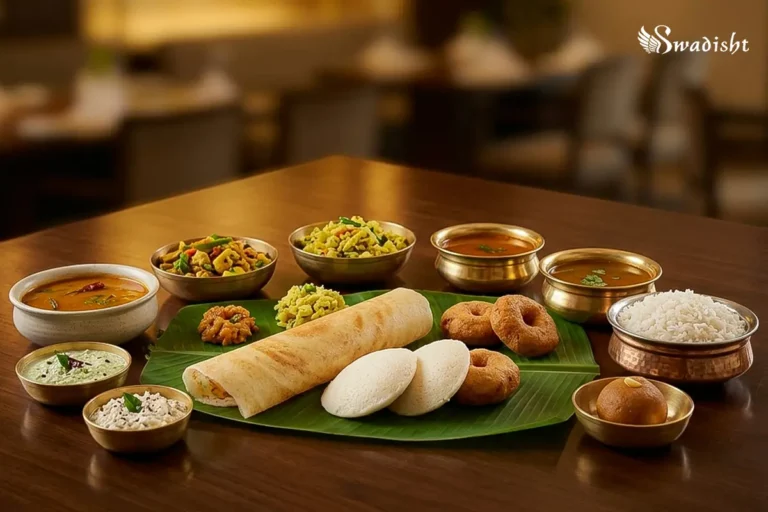
- Dosa varieties and idli – round out the regular rotation, proof that this cuisine’s rice-based repertoire isn’t reserved for special occasions at all; it’s simply what people eat on an ordinary Tuesday.
Key Ingredients Used in Mangalorean Cuisine
A short reference list, since these ingredients keep resurfacing across every category above:
- Coconut – fresh, milked, or oil-pressed; the structural base of most gravies.
- Red chillies (particularly Byadgi) – for colour and a rounded, manageable heat.
- Tamarind – the primary souring agent in curries and rasams.
- Kokum – a milder, fruitier sour note used in vegetarian and some seafood dishes.
- Curry leaves – used almost exclusively in tempering, added at the start or finish of cooking.
- Mustard seeds – another tempering essential, added to hot oil until they pop.
- Coriander seeds – dry-roasted and ground for gravies.
- Cumin – used both whole and ground, often alongside coriander.
- Rice – the staple grain, and also the base for batters, flours, and dumplings.
- Seafood – fresh catch from the Arabian Sea, central to the region’s food identity.
Mangalorean Cuisine Across Different Communities
It’s worth repeating and expanding on this, because it’s genuinely the most misunderstood part of the cuisine for outsiders: “Mangalorean cuisine” is an umbrella term, not a single style.
Tuluva cuisine: Rooted in the region’s original Tulu-speaking population, leans heavily on locally grown produce, coconut, and traditional preparations tied to agricultural festivals like Kambala and Bisu.
Mangalorean Catholic cuisine: This carries the clearest external influence, shaped by Portuguese contact from the 16th century onward. This is where you find pork dishes, vinegar-based marinades, and preparations like sorpotel that wouldn’t exist in the region’s other culinary traditions.
Beary cuisine: Belongs to the Muslim trading community with Arab and Malabar links, brings its own rice preparations, biryanis, and a distinct use of spices geared toward slow-cooked meat dishes.
Konkani cuisine: These Konkani-speaking communities migrated to Mangalore’s coast generations ago; it shows up strongly in the vegetarian coconut-based dishes and specific souring techniques using kokum rather than tamarind.
Gowda cuisine: Represents a significant farming community that brings rustic, locally-sourced traditional vegetable and grain-based preparations to the regional table.
None of these is competing versions of “real” Mangalorean food; together, they are Mangalorean food.
Mangalorean Cuisine vs Other Coastal Karnataka Cuisines
Feature | Mangalorean Cuisine | Udupi Cuisine |
|---|---|---|
Primary Focus | Diverse, embracing seafood, meat, and vegetarian dishes equally. | Predominantly and strictly vegetarian. |
Historical Roots | Shaped by a mix of different communities and cultures. | Historically rooted in temple food traditions. |
Key Ingredients | Coconut, rice, and coastal spices. | Coconut, rice, and coastal spices. |
If you want to understand these differences in greater detail, take a look at our guide on Mangalorean food vs Udupi food.
Where to Experience Authentic Mangalorean Food
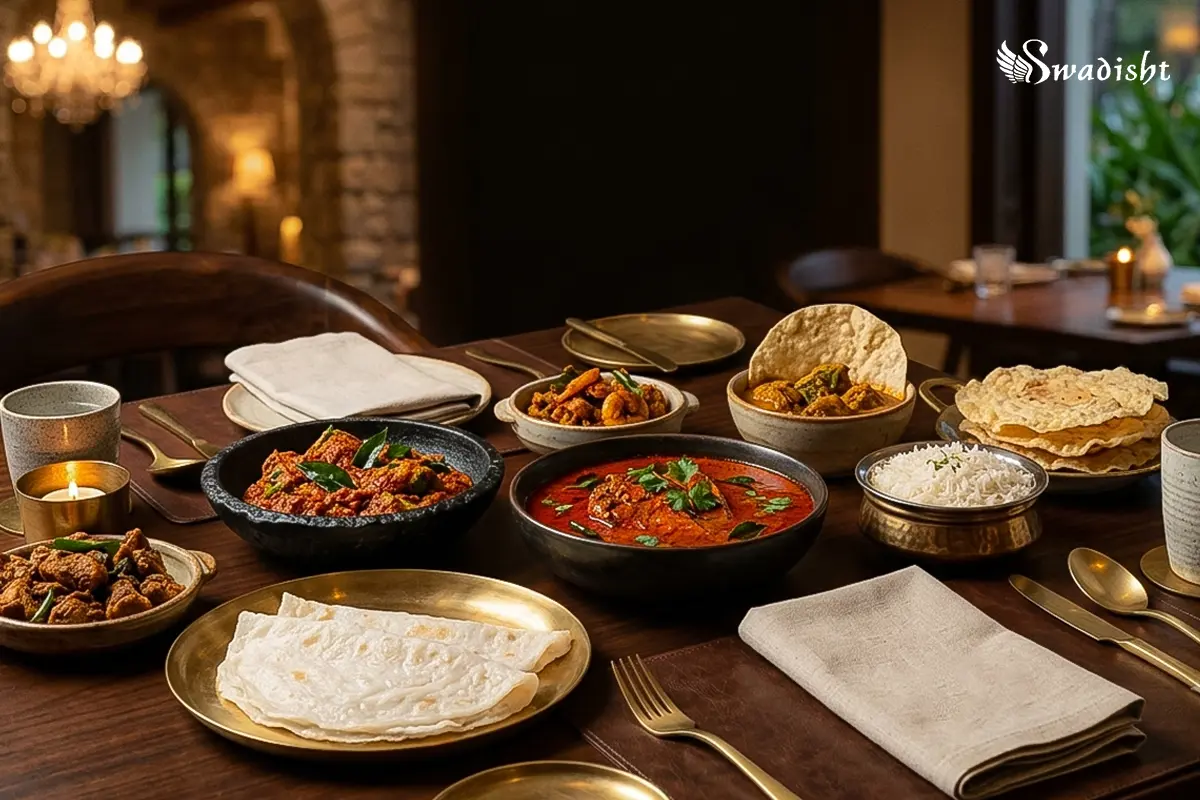
One of the best ways to understand Mangalorean cuisine is to experience its traditional flavours in a local restaurant. Visitors can explore seafood, rice-based dishes, coastal curries and other regional favourites at restaurants across Mangalore. If you’re looking for a place to try this range of local and coastal flavours in one sitting, our restaurants in Mangalore are a good starting point, with dishes spanning the seafood, vegetarian, and meat categories covered above.
What to Look for When Choosing a Mangalorean Restaurant
Not every place claiming “coastal cuisine” delivers the real thing, so here’s what’s worth checking before you sit down:
- Authentic regional dishes on the menu, not a generalised “South Indian” spread with one or two coastal items thrown in.
- Fresh seafood, ideally sourced daily rather than frozen and stored; the difference is obvious the moment it’s on your plate.
- Traditional preparation methods, particularly ground coconut masalas rather than shortcuts using powdered mixes.
- Vegetarian options that go beyond a token paneer dish; real Mangalorean vegetarian food (gojju, sasam) should be represented too.
- Family-friendly seating, since a lot of this food is meant to be shared across a table, not eaten solo.
- Variety across categories like seafood, vegetarian, and meat rather than leaning entirely on one.
- Use of local ingredients from Byadgi chilli to fresh coconut, rather than generic substitutes.
If these are the things you’re checking for, it’s also worth looking at what makes for the best family restaurants in Mangalore more broadly, since ambience and seating matter almost as much as the food itself when you’re eating with a group.
Mangalorean Cuisine for First-Time Visitors
A quick, practical cheat sheet if you’re eating your way through this coast for the first time:
- If you eat seafood – start with fish curry, fish fry, or a prawn preparation. These are the dishes locals themselves order most.
- If you prefer vegetarian food – try neer dosa, goli baje, and a coconut-based vegetable curry like sasam.
- If you want breakfast – neer dosa, buns, and goli baje with filter coffee is about as local as it gets.
- If you want something traditional and less commonly seen elsewhere – look for rice-based dishes like pundi and the region’s specific curry styles, rather than defaulting to the same dosa-idli combination you’d find anywhere in South India.
Conclusion
Mangalorean cuisine is more than seafood; it’s a combination of coastal ingredients, coconut, spices, rice-based foods, and culinary traditions shaped by generations of different communities living, cooking, and occasionally borrowing recipes from each other along this one stretch of coast. That’s what makes it hard to summarise in a single list, and also what makes it worth actually sitting down for, rather than just reading about.
Want to experience these flavours in person? Explore our top restaurants in Mangalore and discover dishes inspired by the region’s rich food culture.